Filing a property value complaint in Stark County is an important step for homeowners who believe their property has been incorrectly valued by the county auditor. An inaccurate valuation can lead to higher property taxes, financial strain, and ongoing frustration. Fortunately, Stark County provides a clear and legal process for challenging an assessment through its Board of Revision (BOR). Whether your home is overvalued due to outdated data, recent damage, market changes, or incorrect property characteristics, filing a complaint can help ensure your tax bill reflects the true value of your property.
Why Homeowners File a Property Value Complaint
Most property value complaints begin when homeowners notice an unexpected increase in their tax bill or when they see the county’s listed market value for their property and believe it is too high. Sometimes values increase because of general market appreciation, but other times, the county assessment may not reflect your property’s true condition. Issues like structural damage, outdated features, neighborhood decline, or incorrect square footage can all lead to overvaluation.
In Stark County, property taxes are calculated based on the county auditor’s assessment. When that assessment is wrong, you pay more than you should. Filing a complaint gives you the opportunity to present evidence, correct the numbers, and potentially reduce your tax burden.
Step 1: Understand Stark County’s Filing Window
Before anything else, it’s important to know that Stark County only accepts property value complaints during a very specific timeframe. The filing window opens on January 1 and closes on March 31 each year. This is a strict deadline established by Ohio law, and the Board of Revision cannot make exceptions for late submissions.
If you miss this deadline, you must wait until the next tax year to file again, even if your valuation is clearly incorrect. Because of this, it’s smart to start gathering information early ideally right after the Stark County Auditor mails out updated tax valuations. Acting quickly gives you enough time to collect evidence and complete all forms correctly.
Step 2: Know When a Property Value Complaint Is Justified
Not every homeowner needs to file a complaint, but you should consider it if:
- Your property was damaged and the county did not adjust the value
- Your home is outdated and recent sales in your neighborhood are much lower
- The county’s listed square footage, number of rooms, or improvement details are incorrect
- You purchased the property for less than the assessed value
- Comparable homes in Stark County are valued significantly lower
Property values must reflect fair market value, not inflated or inaccurate data. If you feel the auditor’s assessment is not aligned with reality, you’re well within your rights to challenge it.
Step 3: Gather Strong Evidence to Support Your Case
The Board of Revision requires evidence, not opinions. To increase your chances of receiving a valuation change, gather as much documentation as possible. Useful evidence includes:
Recent Appraisal
A professional appraisal is one of the strongest forms of evidence. It shows what a licensed expert believes your property is worth based on market data.
Comparable Sales (Comps)
Find recently sold properties in your neighborhood with similar size, age, features, and condition. If they sold for significantly less, this supports your case.
Photos of Property Damage or Issues
Pictures of leaking roofs, foundation cracks, outdated interiors, fire damage, or structural problems can strongly influence the board’s decision.
Repair Estimates
If major improvements are needed, showing written estimates from contractors proves that the property’s condition reduces its market value.
Recent Purchase Documents
If you recently bought the home for less than the auditor’s valuation, you can submit closing papers as evidence.
The more evidence you provide, the better your chances. Stark County’s Board of Revision expects a clear, fact-based argument.
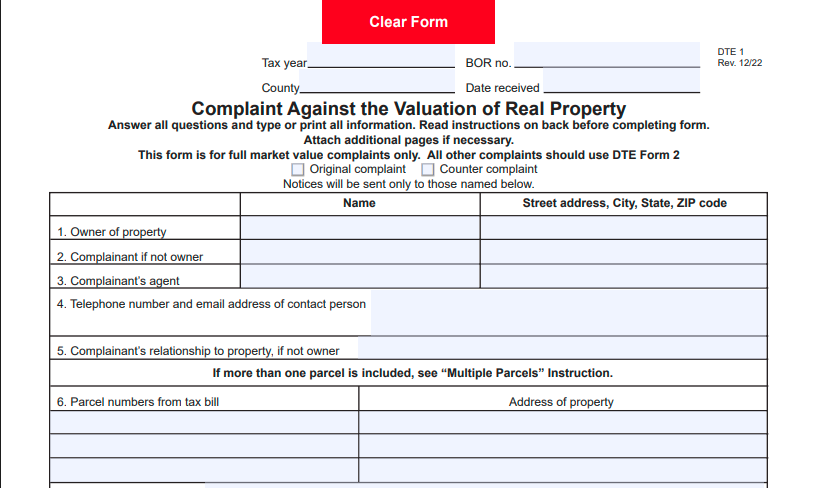
Step 4: Complete the Official DTE 1 Form
When filling out the form:
- Verify your parcel number
- Enter your current assessed value and requested value
- Explain your reason for filing
- Attach all evidence
- Provide accurate contact information
Be careful errors or missing information can delay your case or result in rejection. If you are unsure how to complete any part of the form, refer to the instructions available on the Stark County Auditor’s website.
Step 5: Submit Your Complaint to the Board of Revision
After completing the DTE 1 Form, you must submit it to the Stark County Board of Revision before the deadline. Stark County typically accepts submissions in three ways:
Mail Submission
Send the form and evidence using certified mail so you have proof of the delivery date.
In-Person Drop-Off
You may deliver the complaint directly to the Stark County Auditor or BOR office.
Online Submission (if available)
Some years, Stark County provides an online portal for digital submissions.
Always keep a copy of everything you submit. When your complaint is successfully filed, you will eventually receive a notice from the Board of Revision with your hearing date.
Step 6: Prepare for Your BOR Hearing
Every property value complaint requires a hearing before the Board of Revision. This is your opportunity to present your evidence and explain why your property’s value should be lowered.
What to Expect at the Hearing
- The board will review your documents and ask questions
- You may need to explain your valuation request
- County representatives may challenge your evidence
- You must remain factual and professional
Hearings usually last 10 to 20 minutes. The board’s decision is not made during the meeting, you will receive it later by mail.
Step 7: Wait for the Decision and Next Steps
Once your hearing is complete, the Board of Revision continues reviewing the case. They compare your evidence with county records before issuing a written decision. Processing time varies depending on how many complaints were filed that year.
If the Board Approves Your Request
Your property’s taxable value will be reduced, and your tax bill may decrease.
If the Board Denies Your Request
You can appeal the decision through the Ohio Board of Tax Appeals or the Stark County Court of Common Pleas.
Conclusion
Filing a property value complaint in Stark County helps ensure your taxes are based on a fair and accurate market valuation. Although the process requires preparation and attention to detail, homeowners who gather strong evidence and follow each step carefully can successfully challenge incorrect assessments. Staying aware of the filing window, completing the DTE 1 Form correctly, and presenting your case confidently during the hearing are essential parts of achieving a fair outcome.
FAQs
1. How long does it take to receive a hearing date?
Hearing dates vary depending on the number of complaints filed in Stark County that year. Most homeowners receive a hearing notice within several weeks to a few months after submitting the DTE 1 Form. During peak years, the schedule may take longer, but all hearings are typically completed before the next tax cycle.
2. Can I file a complaint if I just bought the property?
Yes. If you recently purchased your home for less than its assessed value, your sale price may serve as strong evidence. You should submit your closing documents, appraisal, and any photos of the property’s condition to help the Board of Revision understand why the county’s valuation does not match your actual purchase price.
3. Can my taxes increase after filing a complaint?
In rare cases, yes. While the goal is to reduce your valuation, the Board of Revision can increase the value if they believe the property is undervalued. This outcome is uncommon but possible. It’s important to file only when you have clear evidence that the county’s valuation is higher than the property’s true market value.
4. What happens if I miss the March 31 deadline?
If you miss Stark County’s March 31 deadline, you must wait until the next year’s filing window to submit a complaint. The Board of Revision cannot accept late filings under Ohio law, regardless of the circumstances. Mark your calendar early and start gathering documentation as soon as your new valuation is issued.
5. Do I need a lawyer or appraiser for the hearing?
Hiring a lawyer or professional appraiser is optional, not required. Many homeowners successfully present their own cases. However, if your property is commercial, highly unique, or complicated, professional assistance may strengthen your case. The key is to provide strong evidence and communicate clearly during the hearing.